Richard Epstein
University of New Mexico
First demonstration of laser cooling in a solid; rare-earth spectroscopy; cryogenic optical refrigerators.
Cooling · coherentA two-day workshop on optical refrigeration, radiation-balanced lasers, and high-power laser source development.
A laser run backwards is a refrigerator. Everything interesting happens in between.
Dedicated to the memory of Mansoor Sheik-Bahae, 1956–2023.
In memoriam
1956 – 2023
Carnot 2026 is dedicated to Mansoor Sheik-Bahae, who passed away in July 2023, aged 67. Born in Isfahan, a descendant of the seventeenth-century polymath Sheikh Bahāʾi, Mansoor came to the United States to study electrical engineering, taking his doctorate at SUNY Buffalo in 1987. He joined CREOL in its founding year and moved to the University of New Mexico in 1994, rising to Distinguished Professor — the highest honor UNM gives its faculty — and becoming the first director of its Optical Science and Engineering program.
With Eric Van Stryland and colleagues, Mansoor invented the Z‑scan: one beam, a moving sample, a detector, and from it the sign and magnitude of a material’s optical nonlinearity. It remains the standard measurement, and the two of them shared Optica’s R. W. Wood Prize for it in 2012. He then found a link that had been thought impossible — Kramers–Kronig relations are linear, so they ought not to connect nonlinear quantities. The way through was to linearize the problem by treating nondegenerate absorption, two photons of different frequency, which made nonlinear refraction predictable from two-photon absorption. A Fellow of Optica and of SPIE, he was also a senior member of the IEEE.
In 1995 Mansoor began working with Richard Epstein on cooling solids with light, and led that effort for the next twenty-seven years, directing the Consortium for Laser Cooling in Solids from 2004 to 2022. The group established Yb:YLF as the material the field now builds on, and in 2022 cooled a load to 125 K. He worked out the theory of radiation-balanced lasers, and his group built the first ones; others carried it from there to the first cooling of Yb-doped silica. And when he pulled the mirror stack out of a semiconductor disk laser, it opened a field — the MECSEL — that now reaches as far as sodium guide stars.
Cooling a semiconductor was something he was deeply passionate about seeing, and he never got the chance. His co-authors called it his unfulfilled dream. One session of this workshop goes straight at that problem. Another continues his work on radiation-balanced lasers. A deep thinker, Mansoor never stopped pondering the fundamental limits of noise, entropy and engine efficiency. He would have loved to be at this workshop with all of us. His presence is missed dearly!

Selected works
The premise
A laser pump is a single narrowband mode; the fluorescence it drives is broadband and leaves in every direction. That difference in entropy between the two light fields is what allows a solid to be cooled with light, and it gives a laser crystal three operating points. When lasing, the quantum defect heats it. Pumped below the mean fluorescence energy, anti-Stokes emission carries heat away — optical refrigeration. In between, the two cancel: a radiation‑balanced laser, whose gain medium carries no net heat load.
Heat limits the average power, beam quality and frequency stability of solid-state lasers. This workshop is about the regime where source design and thermal management stop being separate problems.
Carnot continues the Photonic Heat Engines community, which met for eight editions within a larger photonics meeting through 2024. This is its first independent meeting.
Everyone named here has accepted. Each badge gives the physics, not the session: color for which way the heat goes, shape for the pump.
+Absorption, emission and extraction — work that adds to any column, because it acts on the photonic environment rather than on how the state was excited. Two of its three cells are empty this year.
University of New Mexico
First demonstration of laser cooling in a solid; rare-earth spectroscopy; cryogenic optical refrigerators.
Cooling · coherent
Leibniz Institute for Crystal Growth (IKZ), Berlin
Fluoride crystal growth; Yb-doped cooling materials; radiation-balanced laser design.
Cooling · coherent
University of Washington
Laser refrigeration of nanomaterials; Yb-doped nanocrystals; nanoscale thermometry.
+Cooling · density of states
University of Notre Dame
Semiconductor nanostructures; single-particle spectroscopy; laser cooling of semiconductors.
Cooling · coherent
University of California, Irvine
Nanophotonics and plasmonics; hot-carrier photophysics; luminescence thermodynamics.
Cooling · coherent
University of Illinois Urbana-Champaign
Optical fiber materials and glass science; Brillouin scattering; fiber laser design.
Balanced · coherent
Stanford University
Rare-earth-doped fiber lasers, amplifiers and sensors; radiation-balanced silica fiber lasers.
Cooling and balanced · coherent
Max Planck Institute for the Science of Light, Erlangen
Ultrafast and field-resolved optics; sun-pumped radiation-balanced lasers.
Balanced · incoherent
University of California, Berkeley
Opto-electronic thermodynamics; photon free energy and entropy in emission and absorption; light extraction in LEDs and solar cells.
Cooling · incoherent
Saint Mary’s College
Thermodynamics of photoluminescent cooling; cooling with incoherent and broadband light.
Cooling · incoherent
University of New Mexico
Ultrafast and quantum optics; laser cooling of solids; vacuum-field fluctuations.
Welcome
Air Force Office of Scientific Research
Program Officer, High-Energy Radiation-Matter Systems (HERMES).
Panel discussion
Universidad de Buenos Aires
Laser cooling of solids and nanoparticles in electrodynamic traps; cavity-modified electromagnetic environments; Purcell effect and enhanced anti-Stokes emission.
+Cooling · density of states
Maxwell Labs
Nanophotonics, computational inverse design, and high-power optical refrigeration.
+Cooling · density of states


Support
Organizations interested in supporting the workshop are welcome to write to carnot.workshop@gmail.com.
Workshop sponsor

With support from


Final, 21 October 2026. The workshop runs from 08:00 on Saturday to 15:00 on Sunday — the program closes at 13:30, and the optional laboratory tours run until 15:00, so a flight from 17:00 onwards is safe. Session themes run along the thermal axis: rare-earth cooling, semiconductor cooling, radiation-balanced lasers, then high-power sources and applications.
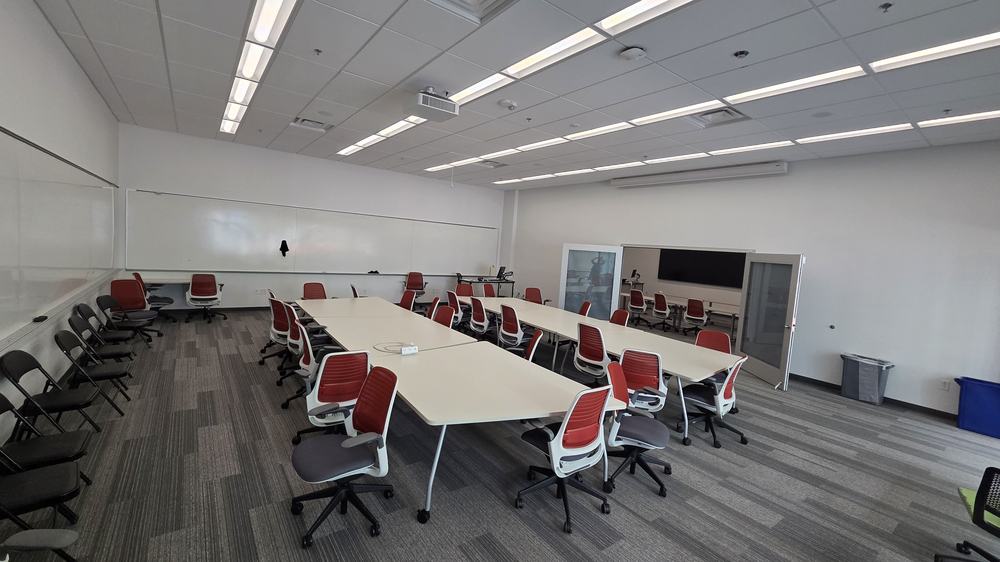
Students and postdocs
The posters come from the speakers’ groups and from UNM. Every poster gets a two-minute flash talk on the Saturday afternoon, before the bus leaves for the restaurant, and the boards go up at La Fonda del Bosque, where the session runs from 17:20 until dinner at 18:30. Print at 4 × 3 feet, landscape — the boards cannot take portrait. Mounting material is provided.
Poster prizes — sponsored by SELA Photonics, Triton Photonics and the UNM Department of Physics and Astronomy — are awarded at the workshop dinner, and the winners give short talks on Sunday morning. Our thanks to the poster prize jury: Hanieh Fattahi, Christian Schmiegelow and Masaru Kuno.
Photos
We are sorting through the photographs from the two days. They will be posted here shortly. If you took pictures you would like included, send them to carnot.workshop@gmail.com.
Venue and travel
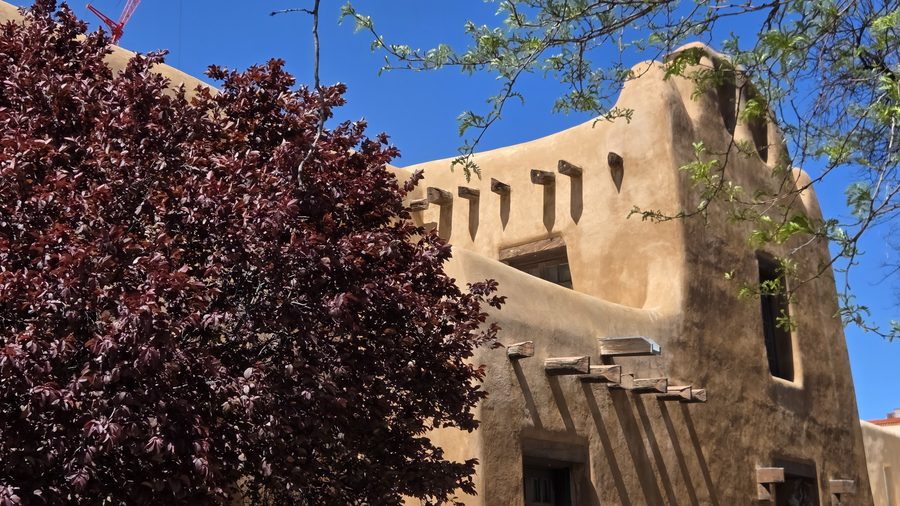
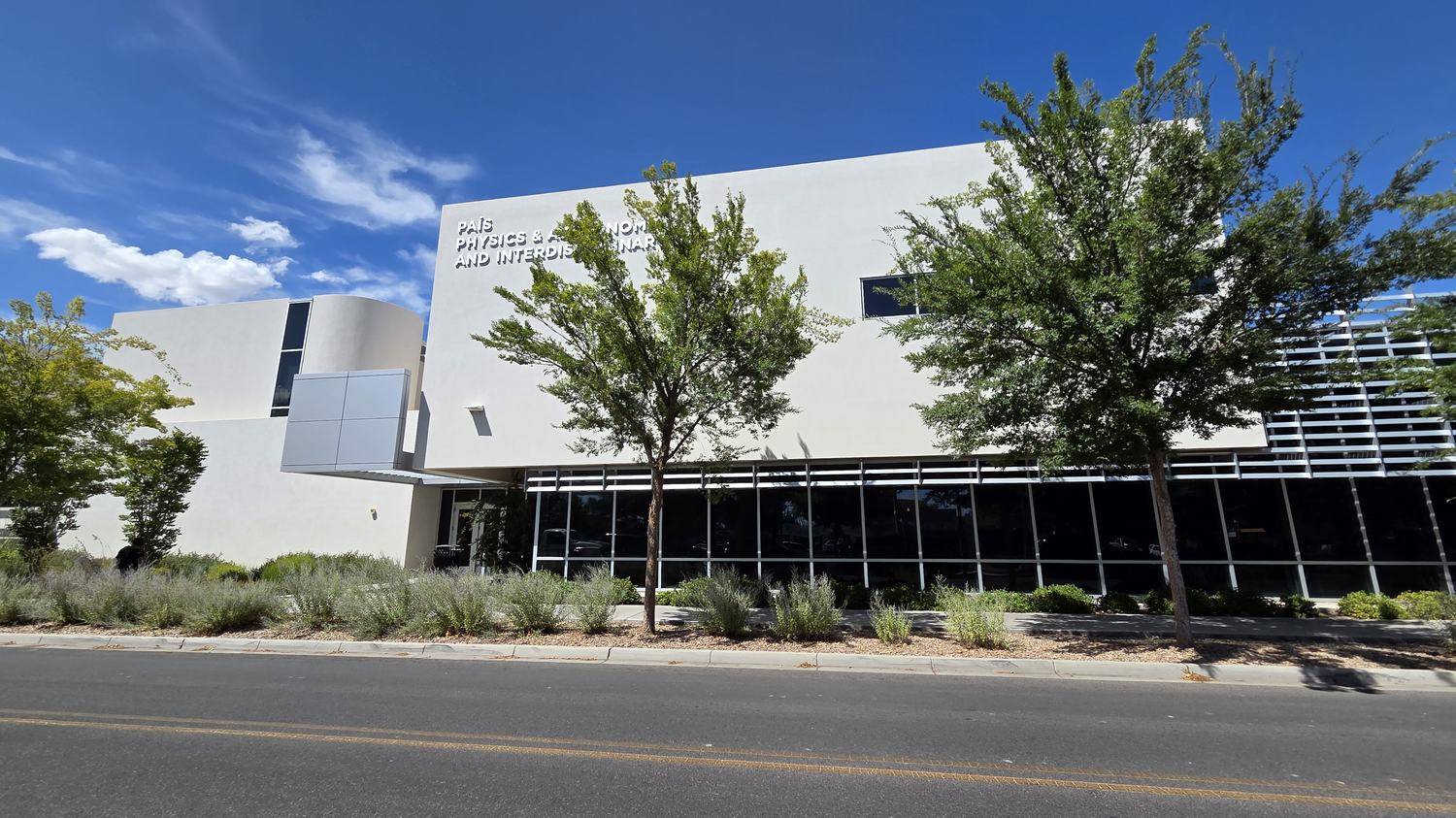
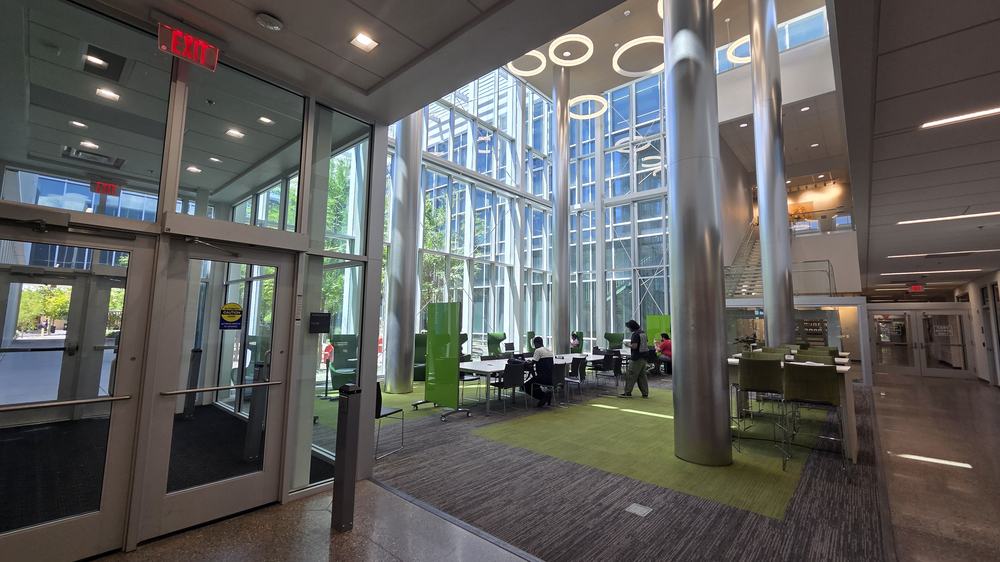
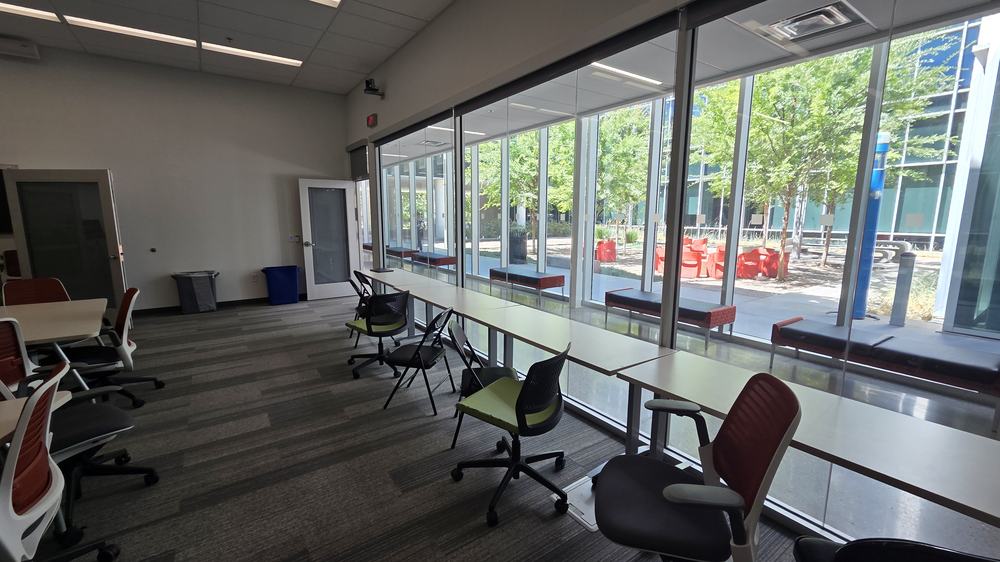
The workshop meets in the Physics, Astronomy and Interdisciplinary Sciences building on the University of New Mexico main campus. Los Alamos, Sandia, the Air Force Research Laboratory and UNM's Center for High Technology Materials are all within reach of the same room — which is why the field's center of gravity has moved here.
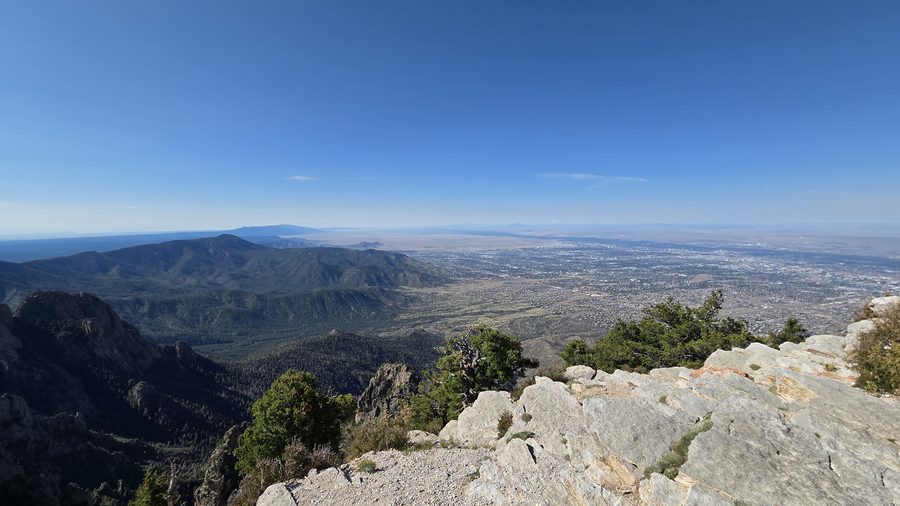
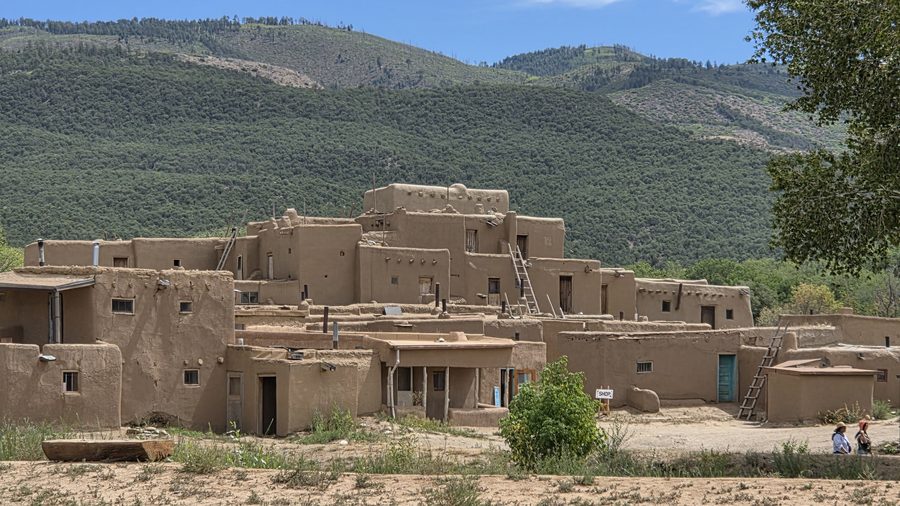
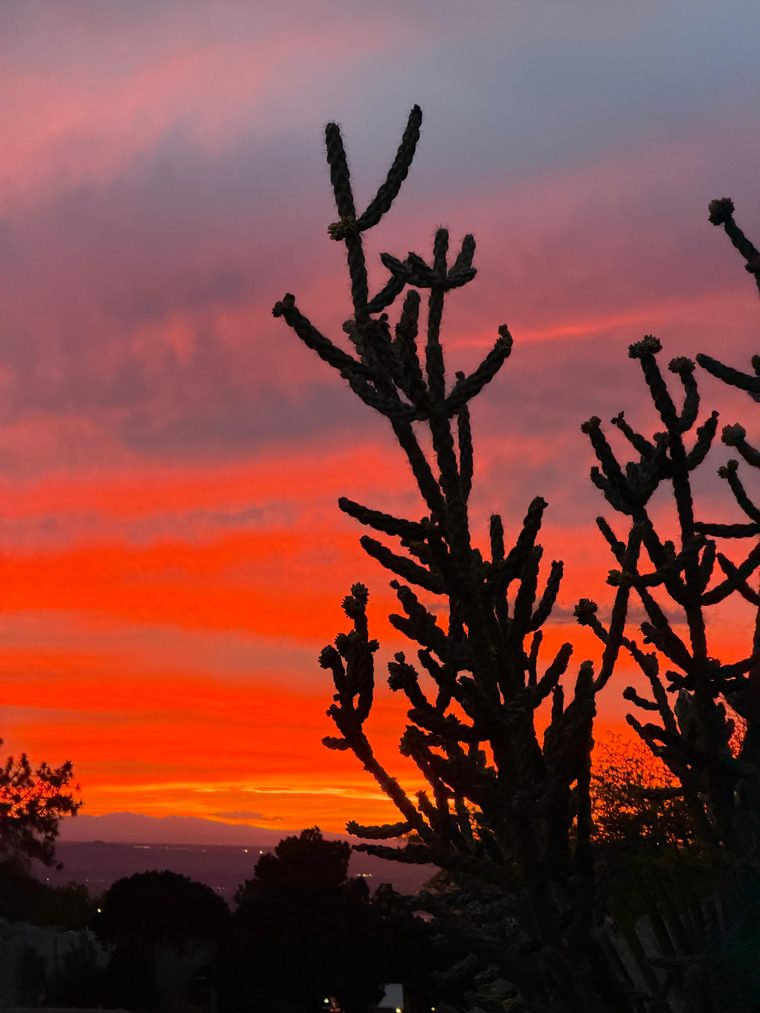
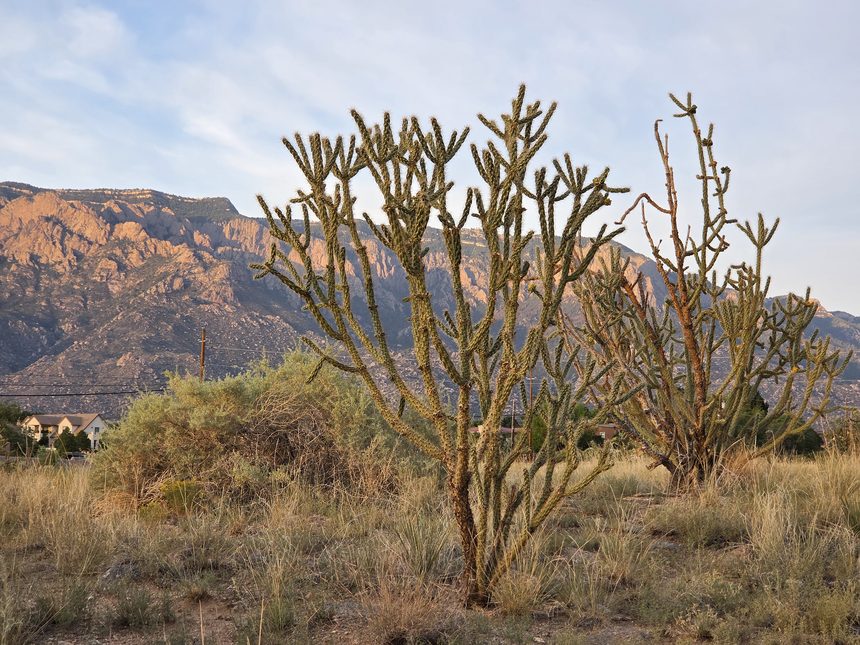
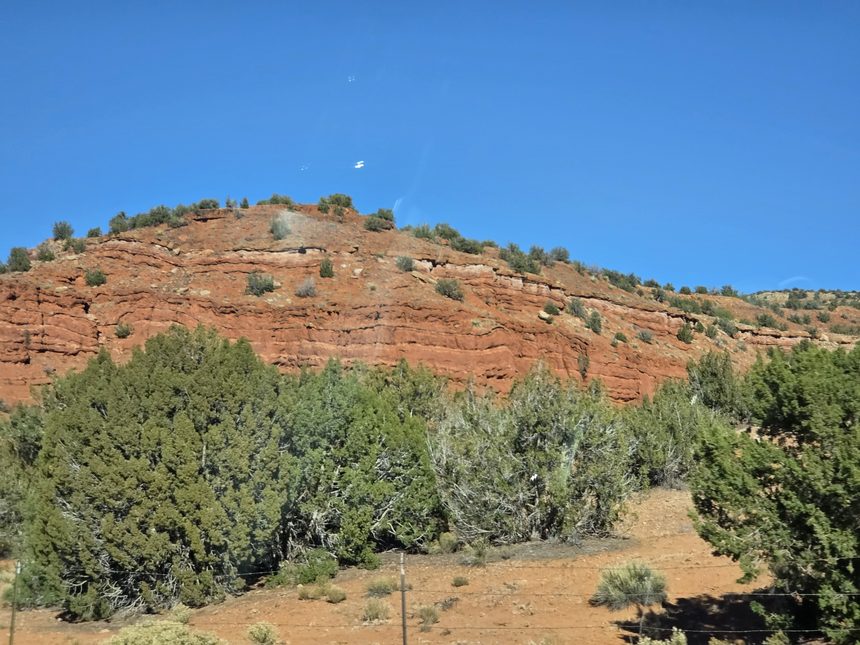
Painters moved to New Mexico for the light. At 5,300 feet the air is thin and dry, the blue overhead is harder than seems reasonable, and shadows keep their edges. It is a fitting place to spend two days arguing about photons.
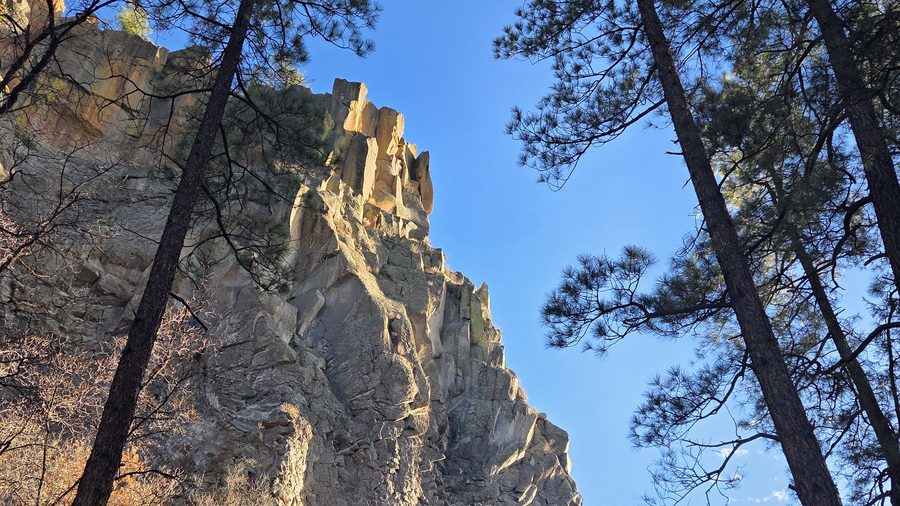
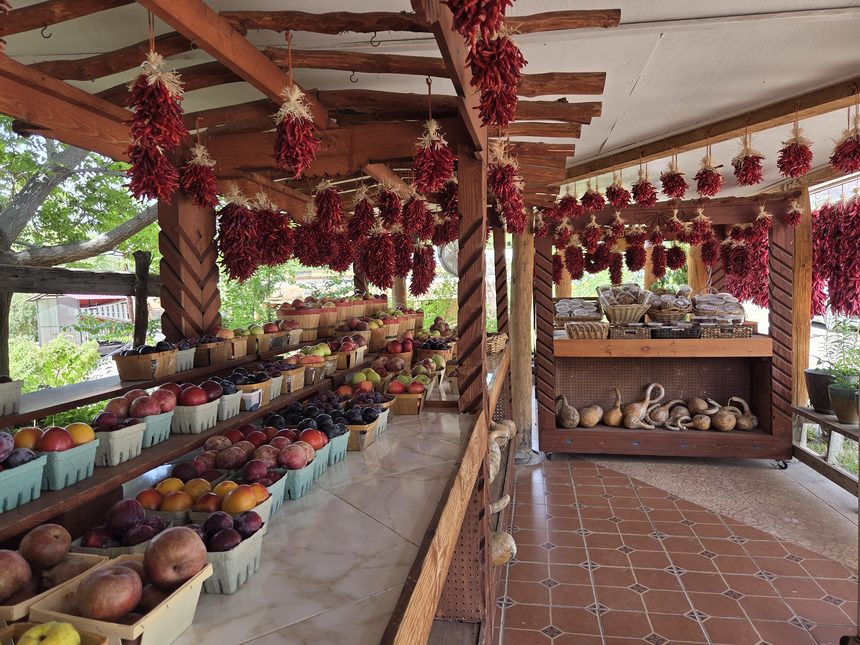
Late October is the best of it — seventies by day, forties after dark, aspen gold still holding on the Sandias, and balloons going up at dawn.
The building
If you can stay an extra day